Serving Carrollton
Water Damage from Firefighting in Carrollton
Call us for a free water damage from firefighting estimate
Serving Carrollton
Call us for a free water damage from firefighting estimate
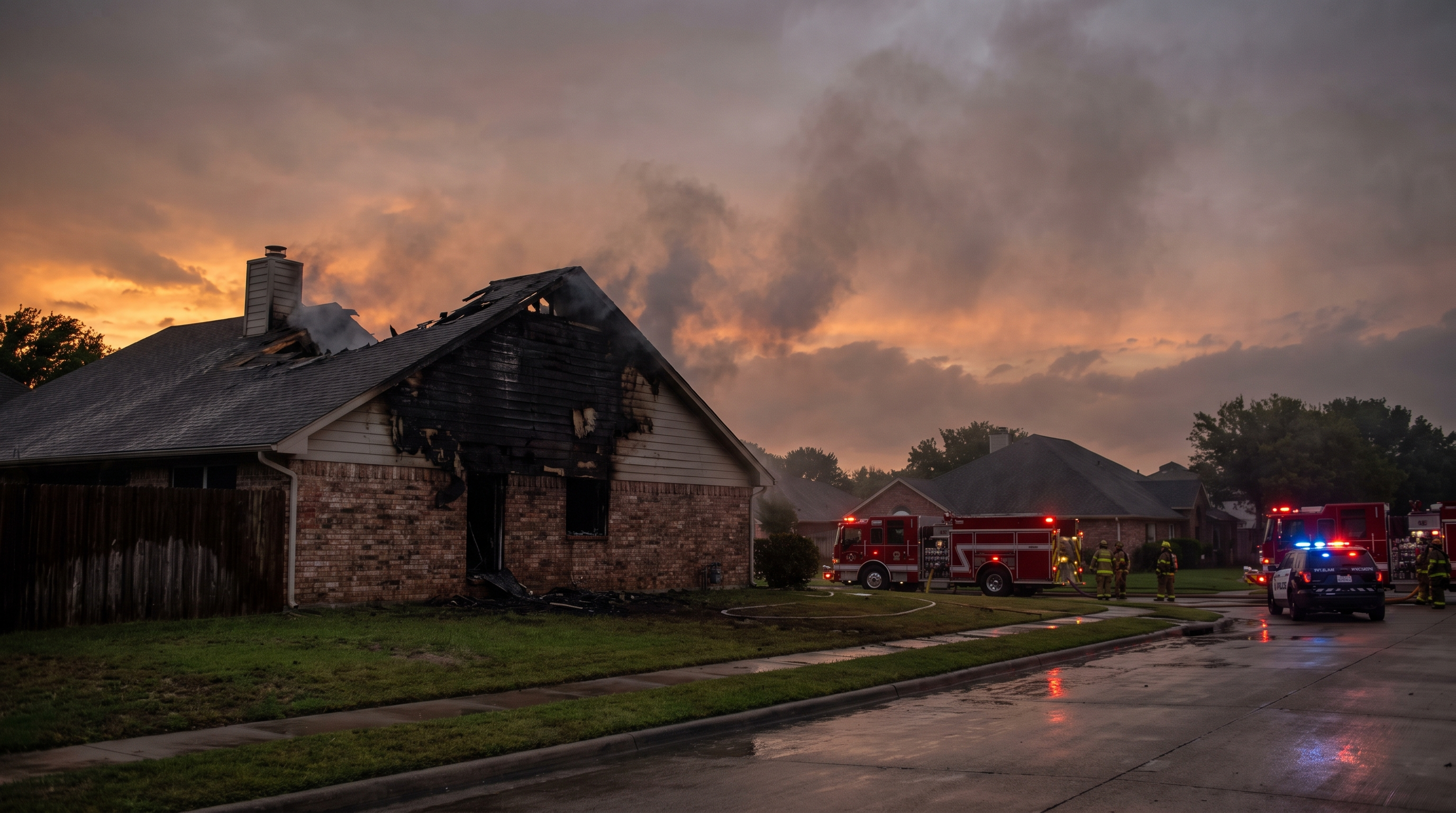
Firefighters may use hundreds or thousands of gallons of water to stop a structure fire. That water can run under flooring, soak cabinets, pool inside wall cavities, and settle below carpet pads. In Irving's older slab-on-grade homes, water can hide under baseboards and behind patched walls long after the visible puddles are gone.
The drying plan should start as soon as the property is safe to enter. Contractors use extraction equipment, air movers, dehumidifiers, moisture meters, and sometimes controlled demolition to remove wet materials before mold starts. They also need to separate clean water exposure from contaminated debris water that picked up ash, insulation, or fire residue.
Winter Storm Uri taught many Irving homeowners how fast wet materials can create insurance and repair problems. Firefighting water creates the same pressure, with the added problem of smoke residue and damaged power. Drying decisions need to account for charred materials, electrical safety, and contents that may need inventory before disposal.
Irving Fire Damage Restoration connects you with contractors who can dry the structure, document moisture, and coordinate water mitigation with smoke cleanup and fire repair.
Carrollton has older subdivisions, townhomes, and newer infill housing across a broad north Dallas area. Fire damage can look contained at first, then smoke shows up in closets, HVAC returns, attic spaces, and attached garages. The contractor should trace that spread before the claim scope gets locked in.
Water from fire response can soak floors and walls while crews focus on the burn area. In attached housing, smoke odor and water travel can affect nearby units or shared spaces. Good documentation helps the homeowner, adjuster, and contractor agree on what needs cleaning, drying, removal, or replacement.
Irving Fire Damage Restoration connects Carrollton property owners with licensed contractors for fire damage assessment, smoke cleanup, firefighting water mitigation, contents restoration, odor removal, and board-up or tarping.
Fire damage and water damage share the same rooms but need different equipment. We connect you with contractors who dry the structure while protecting the smoke cleanup and insurance documentation.
Adjusters need proof of what was wet, what dried, and what had to be removed. Moisture logs make the drying process easier to explain and harder to dismiss.
Start drying before trapped water turns into mold or rot.
Free — no obligations